Preventive HVAC Maintenance That Actually Prevents Breakdowns
Regular maintenance is the cheapest insurance your HVAC system has. Our tune-ups catch small problems before they become expensive ones, and keep your system running at its rated efficiency.
Redding homeowners rely on their systems through hot summers and cold winters. Our maintenance visits cover air conditioners, furnaces and heat pumps, so heating and cooling are checked before the season that needs them. Ask about a maintenance plan when you request a visit.
What a Tune-Up Covers
- Air filter cleaning and replacement
- Refrigerant level checks and leak detection
- Evaporator and condenser coil cleaning
- Thermostat calibration and system testing
- Ductwork inspection and sealing
- Lubrication of motors, bearings, and moving parts
- Drain line and drip pan cleaning
- Electrical connection and safety checks
Improved Efficiency
Clean coils and calibrated controls keep airflow strong and energy use low.
Longer System Life
Regular tune-ups prevent the wear that shortens equipment lifespan.
Fewer Breakdowns
Preventive care catches issues before they turn into costly, unexpected repairs.
Better Air Quality
Clean filters and ducts mean fresher air circulating through your home.
Not sure what to budget? See what HVAC costs in Redding.
Request a Free Quote
Send your request from this page: it reaches our office marked HVAC Maintenance Plans, so we know what it is about before we call you back.
- Phone Number
- (530) 972-2739
- Email Address
- office at apexhvac.co
- Service Area
- Northern CA, Redding, Shasta County & Beyond

Why Redding systems work harder than most
A system in Redding does two big jobs in one year. NOAA station data for Redding Municipal Airport (1991 to 2020 averages) counts about 41 days a year at or above 100F and about 106 days at or above 90F, with a July average high of 99.9F. The same station averages about 27 days a year at or below 32F, and a January average low of 37.7F. Source: NOAA climate normals.
That adds up to roughly 2,032 cooling degree days and 2,576 heating degree days a year, a measure of how many degrees and days your home spends needing cooling or heat. An air conditioner here runs hard for months, then a furnace or heat pump picks up the same house in winter. Parts that spin, switch and carry current get used in both seasons, so the wear does not rest for half the year.
The station also reached 119F on July 6, 2024, per NOAA station data. On a day like that, a system with a clogged coil or a weak capacitor has nowhere to hide. The visit we do in spring is meant to find that weakness while the weather is still kind to everyone.
What the visit looks like, step by step
The list above is what we check. Here is how a visit tends to run. A technician checks the thermostat and the air handler first. Filters come out and are cleaned or replaced. The indoor coil, drain line and drip pan are looked at next, since a blocked drain is a common reason a ceiling or closet gets wet in July.
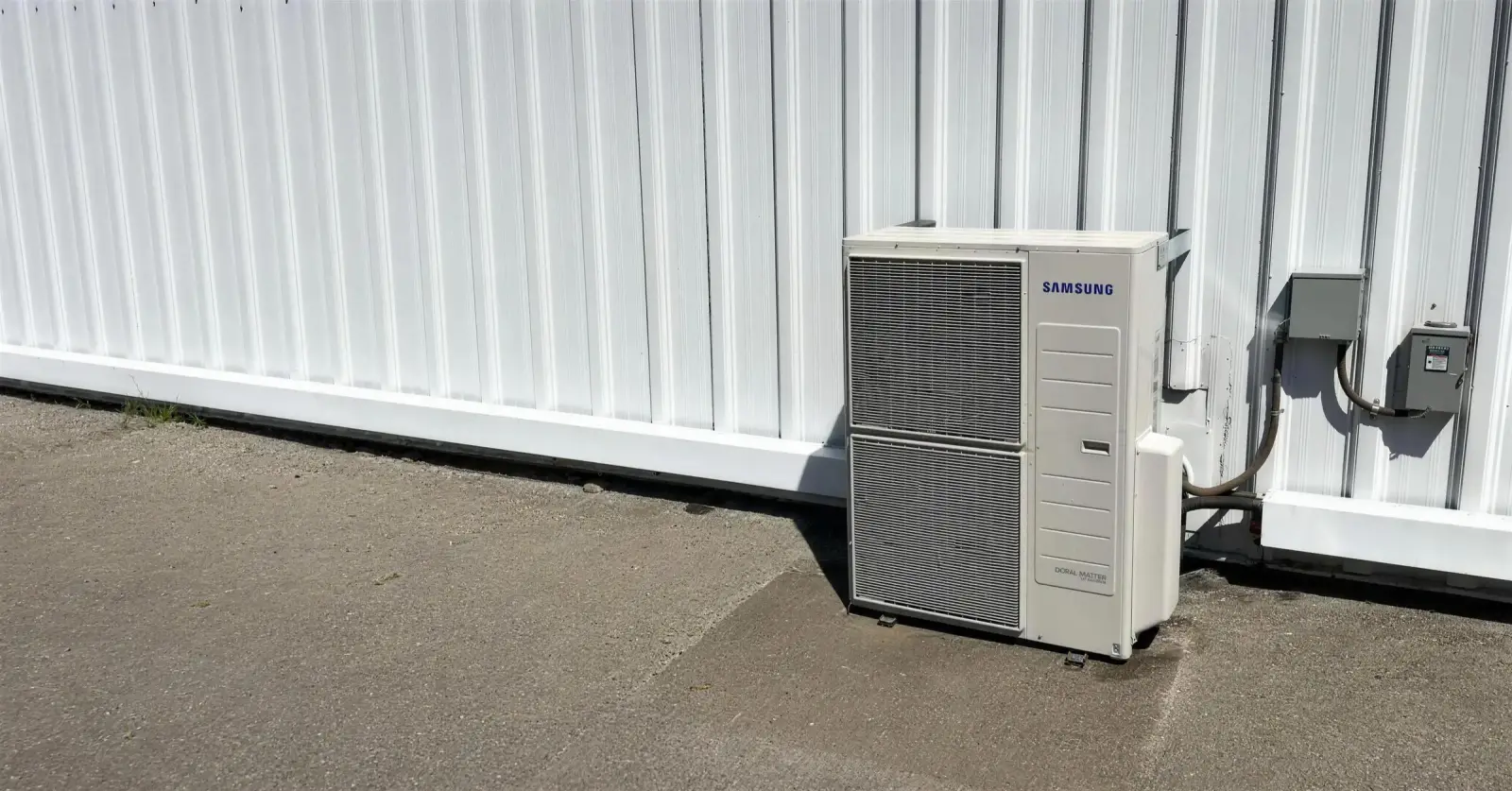
Outside, the condenser needs clear space around it, clean coils and straight fins. Leaves and yard debris gather there. The technician then checks refrigerant levels, electrical connections and moving parts, and tests the system start to finish. If the ductwork shows leaks or damage, we point it out and explain the options on the spot. If a visit turns up something that needs fixing, our HVAC repair service handles it.
Heat pumps get the same attention in both directions. A heat pump cools in summer and heats in winter with the same outdoor unit, so it earns a check before each season. The U.S. Department of Energy says air-source heat pumps can be used in all climates. If you are weighing one for an aging furnace, see our heat pump installation page.
We maintain the equipment you already have, whatever the brand and whoever installed it, and an evaporative cooler on the roof gets its own spring start-up and fall winterizing through our swamp cooler service. Before the technician leaves, you hear what was cleaned, what was adjusted and anything that is starting to wear, in plain words. A worn part is a note on the visit, not a surprise bill: you decide whether to fix it now, at the next visit or not at all, and our AC repair and furnace repair pages explain what each fix involves.
What you can do between visits
Filters are the one job we hope you will keep doing yourself. The U.S. Department of Energy says a clean filter can lower air conditioner energy use by 5 to 15 percent, and it advises cleaning or replacing filters monthly or as the maker recommends. See its Energy Saver Guide. Check yours during the hottest and the smokiest weeks first.
Keep the outdoor unit clear of debris and keep plants back from it. Watch the drain line for drips or standing water. Notice sounds, smells and weak airflow, and write down when they started. A dated note such as "rattle began in June" saves a technician real time, and our guide to the signs your AC is failing explains what those changes usually mean. Refrigerant and electrical problems are not do-it-yourself work, and neither is opening the panels.
Fire season, smoke and your filter
Anyone who lived through the Carr Fire in 2018 or the Zogg Fire in 2020 knows what smoke does to indoor air. CAL FIRE reports the Carr Fire burned 229,651 acres and destroyed 1,614 structures, and the Zogg Fire burned 56,338 acres and destroyed 204.
The EPA says that during smoke, a filter rated MERV 13 or higher helps if your system can handle it, so ask a technician before you swap one in. It also suggests running the fan on rather than auto, and closing any fresh-air intake so the system recirculates indoor air. Read the details in the EPA guide to indoor air filtration. A filter that is already clogged loads the blower, so replace it when it is dirty. For ducts and air cleaning options, see our air quality testing page.
How our maintenance plans work
Every plan is an annual agreement for homes and for businesses. Plans start at $25 a month, and a single-system home on our annual plan pays $250 a year. Those two figures are Apex prices, not a market average, and your own price depends on your system and the coverage you pick. Call (530) 972-2739 and we will quote it.
Without a plan, a single visit is priced per system: Heating or A/C Tune-Up - $125 per service. One tune-up covers one system, the heating or the cooling, so a home that wants both checked books two.
Plan customers get priority for repair and emergency scheduling ahead of one-off service calls. Our labor is backed by a 1-year workmanship guarantee, extended to 5 years for maintenance-plan customers. Replacement parts carry the manufacturer warranty. For comparison, a one-time visit starts with a $99 trip charge during office hours (7am to 5pm), or $125 outside office hours.
Whether a plan pays for itself depends on how old your equipment is and how you use it. If replacing the system is the better choice, see our new HVAC system installation page. For a sense of what repairs and replacements cost in California, read our HVAC cost guide, which gives sourced price ranges rather than promises. First responders receive a 15 percent discount; let us know when you schedule.
Where we maintain systems
Our home base is Redding, and we serve Shasta County and beyond. Towns up and down Interstate 5 are within reach, including Anderson, Cottonwood and Red Bluff. Each page has local facts for that town. See the full service area for the rest.
Businesses are welcome too. We work with property managers and business owners on preventive maintenance contracts across multiple units or locations, and our commercial HVAC page explains that side of the work. To start, call (530) 972-2739 and tell us what equipment you have.
Maintenance Plans
The 8-point tune-up above is the baseline for every visit; our maintenance plans build on it with scheduling and coverage options, for residential and commercial customers alike.
Annual Maintenance Agreements
Every plan is an annual agreement, available for both residential and commercial customers.
Plans Starting at $25/Month
Multiple plan tiers, starting at $25 a month depending on your system and coverage needs.
Single System, $250/Year
A single-system home covered under our annual plan runs $250 a year.
Priority Scheduling
Maintenance customers get priority for repair and emergency scheduling ahead of one-off service calls.
Tune-Up and Plan Questions
Book the cooling check in spring, before the hot stretch. Redding Municipal Airport averages about 41 days a year at 100 degrees or more, and a weak capacitor or dirty coil is far easier to deal with in April than on a July afternoon. Book the heating check in fall, before the first cold mornings arrive.
Twice a year is the sensible rhythm here, once before summer and once before winter, because the same outdoor unit does the cooling and the heating. A furnace with a separate air conditioner gets the same two checks, one for each piece of equipment.
Plans start at $25 a month, and a single-system home on the annual plan pays $250 a year. Homes with more than one system, and businesses, are quoted on what they have. Every plan is an annual agreement. Without a plan, it is Heating or A/C Tune-Up - $125 per service, one system per visit, either the heating or the air conditioning.
Two things beyond the scheduled visits. Plan members are booked ahead of one-off service calls when they need a repair or an emergency visit, and our workmanship guarantee on their system runs 5 years instead of the standard 1 year.
Yes. We service all major HVAC brands, so the plan covers the furnace, air conditioner or heat pump you already own, wherever it came from. The tune-up list is the same for every brand.
Yes. Plans are annual agreements for homes and businesses alike, and we work with property managers and owners on preventive maintenance contracts that cover several units or locations under one agreement. Tell us how many systems you have and where they are, and we will price it.
Yes, ductwork inspection is on the tune-up list. The technician looks at what can be reached for leaks, crushed runs and loose connections, points out anything worth sealing, and explains the options. Bigger duct jobs fall under our insulation and ventilation service.
The Department of Energy advises cleaning or replacing filters monthly or as the maker recommends, and says a clean filter can lower air conditioner energy use by 5 to 15 percent. Check it more often in the peak of summer and during smoke, when filters load up fastest.
The EPA recommends MERV 13 or higher during wildfire smoke if your system can handle it. A denser filter restricts airflow, and some systems are not built for that. Ask the technician at your next visit, and we will tell you what your blower and filter rack can take.
It can help. Clean coils, a clean filter and a correct refrigerant charge let the system run closer to its rated efficiency, and the Department of Energy puts ducts at about 30 percent of a cooling system’s energy use, so a duct leak found at a visit matters too. We do not promise a figure, because every house is different.
Other services
- New HVAC Installations
- HVAC Repairs
- AC Repair
- Furnace Repair
- Emergency HVAC Repair
- Commercial HVAC Services
- Home Air Quality Testing
- Mini Split Installation
- Heat Pump Installation
- Insulation & Ventilation
- Duct Repair & Replacement
- Swamp Cooler Service
- Blown-In Insulation
- Whole House Fans
- Mini Split Repair & Service
- Thermostat Installation
- Thermostat Repair
- Home Sale HVAC Inspection
Our Commitment
Transparent Pricing
Clear, upfront estimates before we start: no hidden fees, no surprise charges once the work is underway.
Guaranteed Work
Trusted parts and materials on every job, backed by our labor guarantee.
Emergencies don’t just happen during business hours. We’re available 24/7.